
A service schedule opens a service ticket when a unit is due: every so many days, weeks, months or years, every so many rentals or days on rent, or every so many hours on a meter, whichever comes first. You see every unit’s state on one screen, and nothing goes out on a rental with a service overdue unless you allow it.
The Services screen #
Go to Maintenance › Services. The top half, Units to service, lists the units that are Overdue, Due, Due soon or Snoozed; the bottom half lists your Schedules.
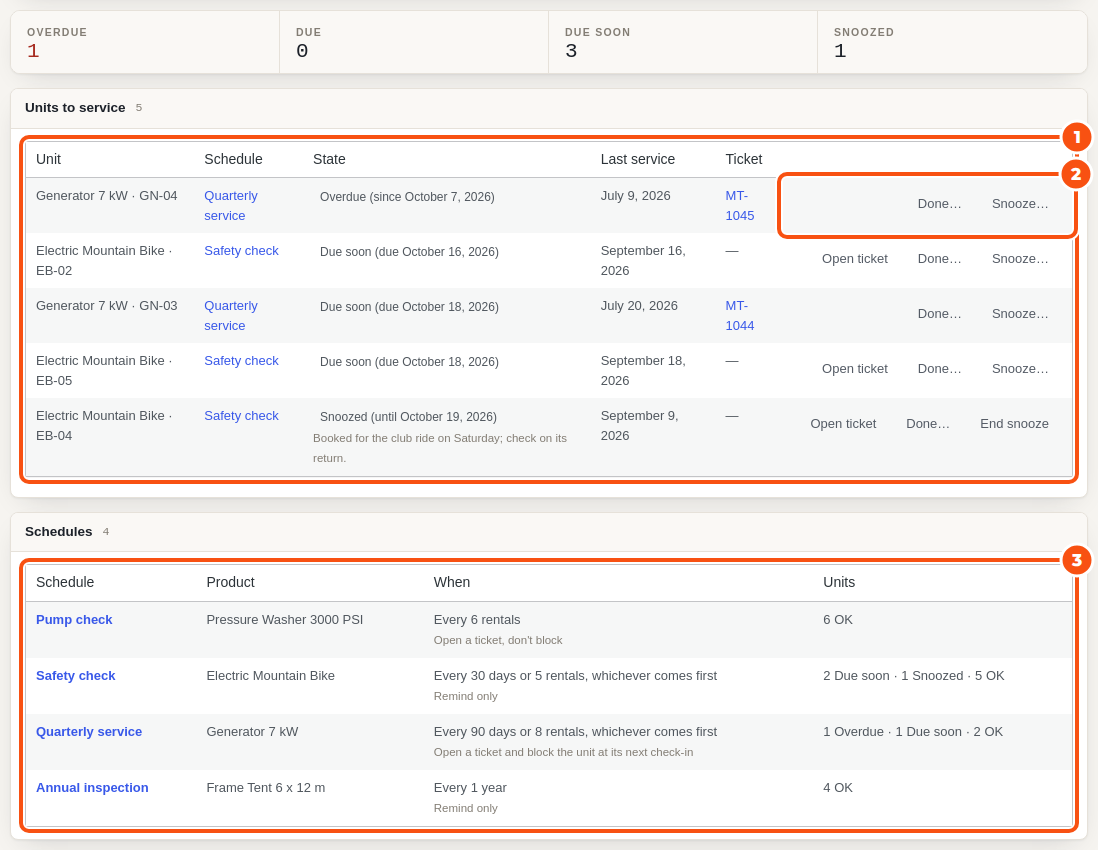
For each unit you can:
- click Done… to record a service done by hand (the date it was Serviced on and a Note); the counters start again;
- click Snooze… to put it off Until a date or for so many more rentals, with a reason (Why). End snooze brings it back;
- open its service ticket, or Open ticket to send it to maintenance now.
The board’s Services due tab and summary card show the same units, and the managers’ daily digest lists the services due.
Adding a schedule #
Click New schedule (or Add a service schedule in the Service schedules box on a product’s edit screen).
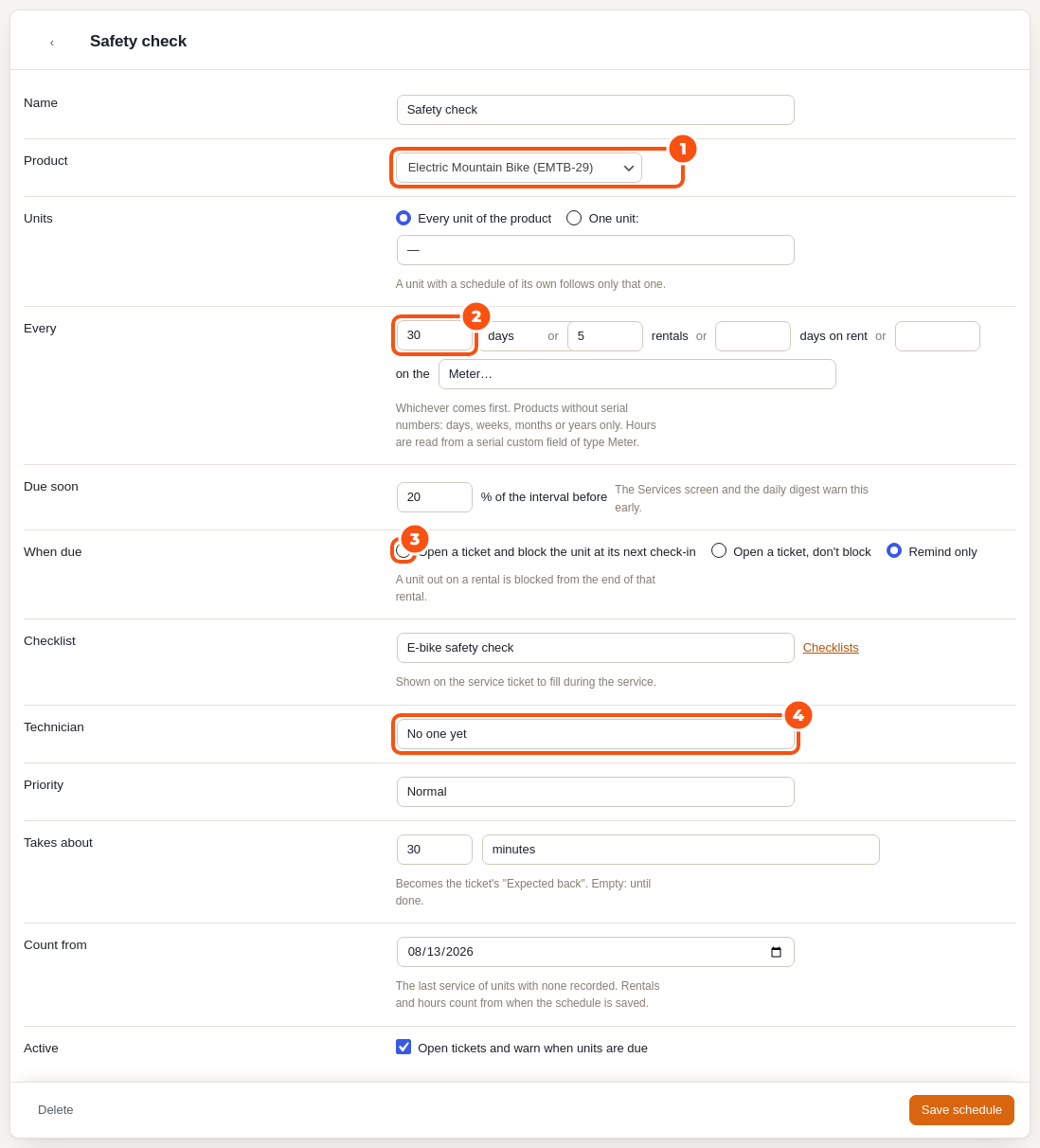
- Give it a Name (Annual service, Safety check) and choose the rental product.
- Choose Every unit of the product, or One unit: for a unit with its own schedule. A unit with a schedule of its own follows only that one.
- Set the intervals. Fill in one or more: every so many days, weeks, months or years; every so many rentals; every so many days on rent; or Meter… hours read from a serial custom field of type Meter. Whichever comes first makes the unit due. Products without serial numbers can use days, weeks, months or years only.
- % of the interval before: how early the Services screen and the digest warn (Due soon).
- When due: Open a ticket and block the unit at its next check-in, Open a ticket, don’t block, or Remind only (the unit is only listed). A unit out on a rental is blocked from the end of that rental, never in the middle of it.
- The ticket it opens: Technician, Priority, and Takes about (minutes or hours), which becomes the ticket’s Expected back. A schedule can also name the checklist to fill during the service.
- Count from: the date of the last service for units with none recorded. Rentals and hours count from when the schedule is saved.
- Tick Active and click Save schedule.
When a service is done #
Close the service ticket with Ready to rent: the service is recorded and the unit’s counters start again. Cancelling a service ticket does not reopen it; the unit shows “Cancelled, not reopened” until you service or snooze it.
Deleting a schedule keeps its open service tickets.
Meter hours #
For engines, generators and anything with an hour meter, add a serial custom field of type Meter to the product’s serial field set (in Regular’s Rentals › Settings › Serials). Readings entered at Send and Return, on the serial page or through the REST API build the unit’s lifetime hours; a schedule set to “every 250 hours” uses them.
Importing schedules #
Many schedules at once? Import schedules from CSV at the bottom of the Services screen takes a file with the columns name, product (ID or SKU), serial, interval (90d, 6mo, 1y), rentals, rental_days, hours with meter_field_id, due_soon_percent, on_due (ticket_block, ticket, remind), priority, est_minutes, starts_on and active. Download the template, tick Check only first, then import. Without an “active” column, new schedules come in paused.


